
Mouse trap bait guide London mice-control advice Inspection-led pest management
Best Bait for Mice: What Works in Mouse Traps?
The best bait for mice is usually a small amount of sticky, high-smell food that cannot be easily stolen from the trap. But bait is only one part of successful mouse control.
Bon Accord Pest Control Ltd provides professional mice control in London for homes, flats, landlords, managing agents and commercial premises, with a focus on inspection, treatment, proofing and prevention.
Quick answer: what is the best bait for mice?
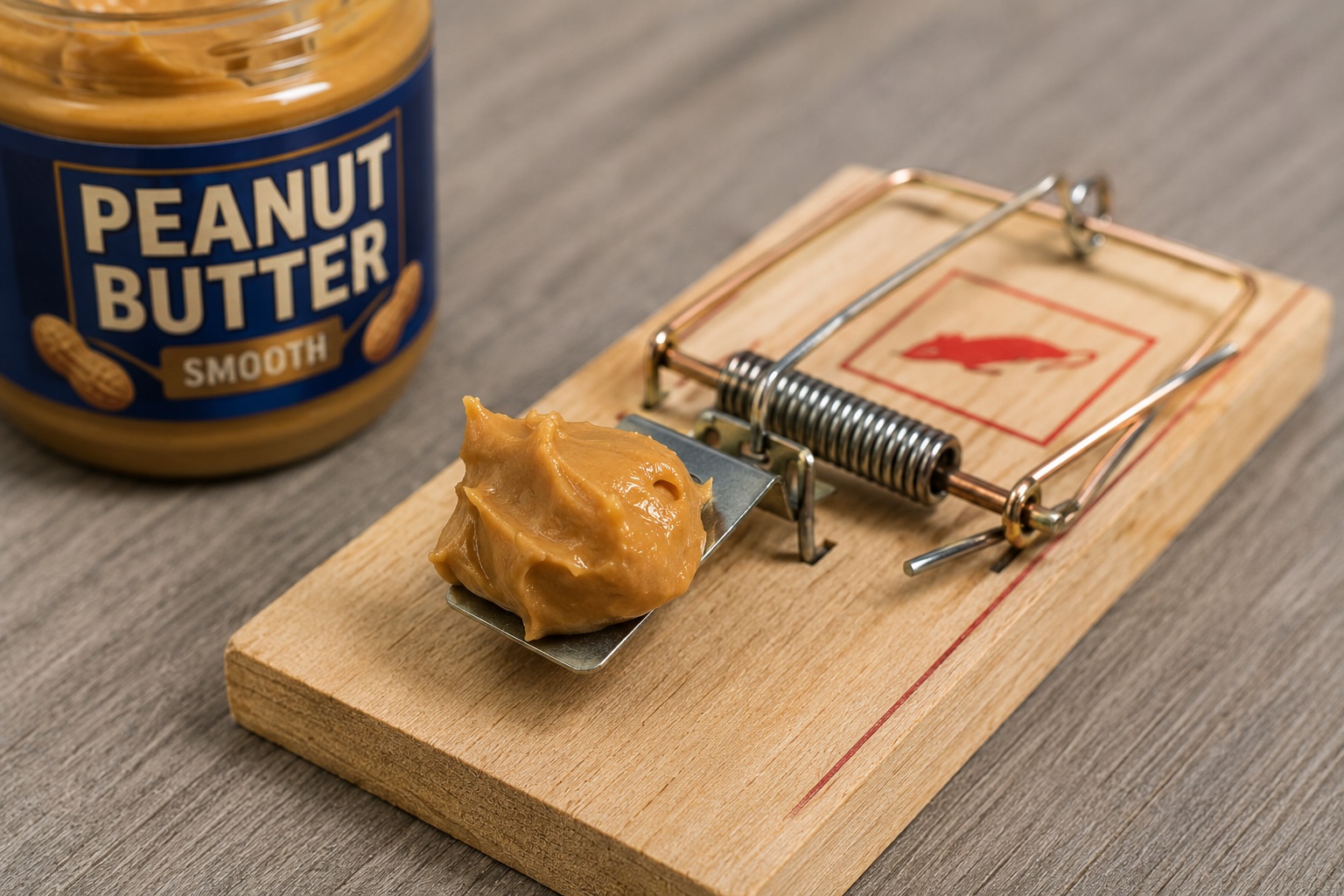
The best bait for mice is usually peanut butter, chocolate spread, hazelnut spread, soft chocolate, seeds or nut paste. Use only a pea-sized amount and secure it to the trap so the mouse has to interact with the trigger.
For best results, place traps along walls, skirting boards, behind appliances, under kitchen units and close to signs of activity. Trap placement usually matters more than bait choice.
Important
Do not give mice extra food, water or nesting material.
Use a tiny amount of bait, remove competing food sources and place traps directly along known mouse routes.
Best bait
Sticky, high-smell bait such as peanut butter, chocolate spread or nut paste usually performs best.
Best amount
Use a pea-sized amount. Too much bait allows mice to feed without triggering the trap.
Best position
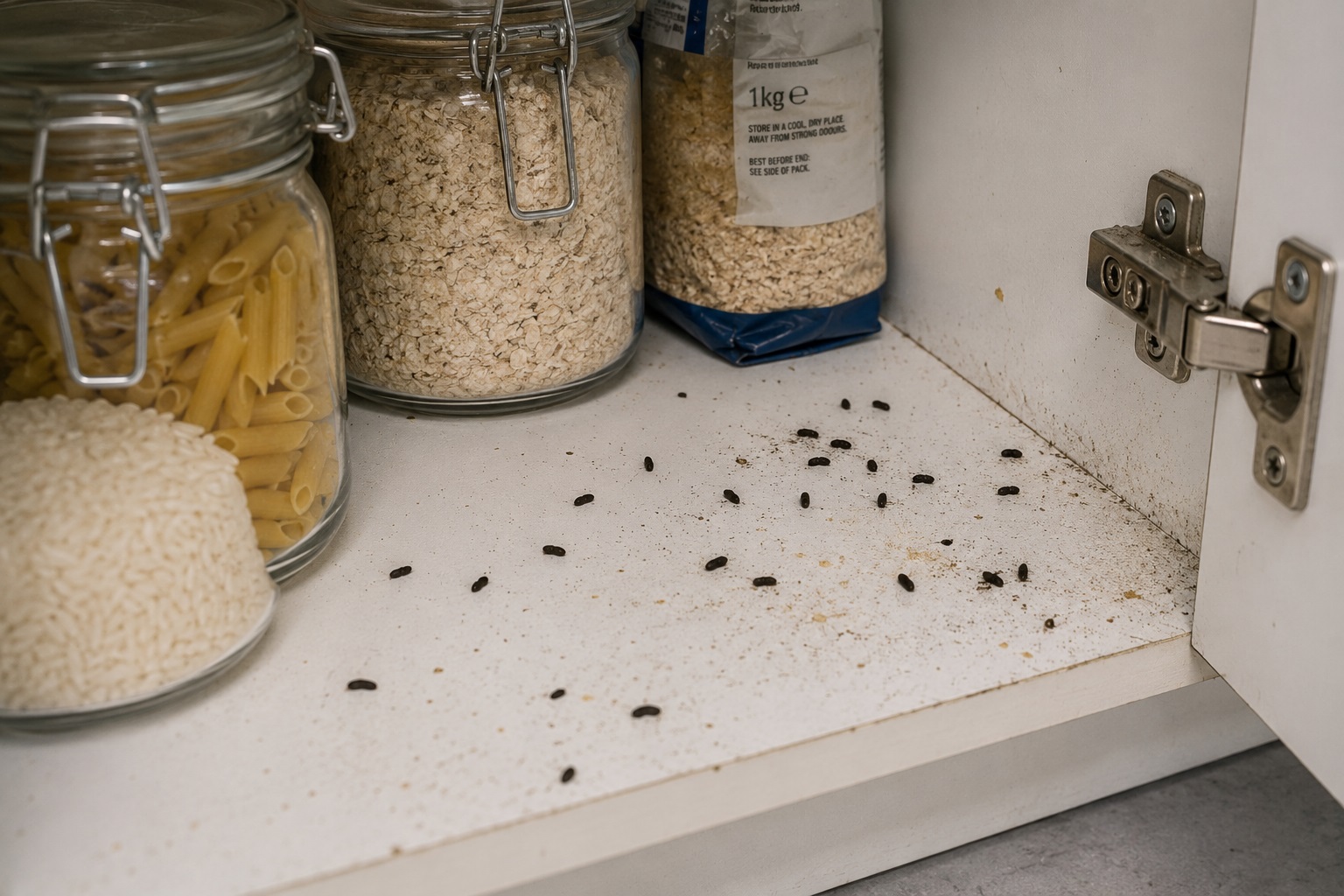
Place traps along walls, behind appliances and close to droppings or known mouse routes.
Best bait for mice ranked
This table covers the main mouse bait food options people use in traps, and when each one is most useful.
| Mouse bait | How well it works | Best use | Notes |
|---|---|---|---|
| Peanut butter | Excellent | Snap traps and enclosed traps | Strong smell, sticky texture and hard for mice to steal quickly |
| Chocolate spread | Excellent | Kitchen mouse activity | Sweet, high-energy and sticky |
| Hazelnut spread | Excellent | House mice and kitchen areas | Strong smell and attractive texture |
| Soft chocolate | Very good | Snap traps | High sugar and fat, but can be removed if not secured |
| Sunflower or pumpkin seeds | Good | Live-capture traps or enclosed traps | Natural food source, but loose seeds may be carried away |
| Oats or cereal | Moderate | Low-risk monitoring | Less sticky and easier for mice to steal |
| Bacon or fatty meat | Sometimes good | Short-term trapping | Strong smell but can spoil quickly |
| Cheese | Inconsistent | Not usually first choice | Common myth, but usually not better than peanut butter or chocolate spread |
| Pet food | Sometimes works | Where pet food is already attracting mice | Better to remove pet food rather than use it as a main bait |
Best bait for house mice
For house mice, the best bait is usually something with a strong smell and high energy value. Peanut butter, chocolate spread and nut paste work well because they are sticky and difficult for mice to remove without touching the trigger.
House mice are small, cautious and often feed from many tiny food sources. This means they may ignore a trap if there are crumbs, pet food, open cereal, bird seed or rubbish available elsewhere.
- Clean crumbs and food debris.
- Store food in sealed containers.
- Remove pet food overnight.
- Empty bins regularly.
- Check under kitchen kickboards.
- Reduce clutter around suspected routes.
Mouse trap bait: why placement matters more than bait
Many people search for “mouse trap bait” because mice are taking the bait but not getting caught. In most cases, the issue is not the bait itself — it is the trap position.
Skirting boards
Mice often travel along edges rather than crossing open rooms.
Behind appliances
Fridge freezers, ovens and dishwashers are common mouse routes and feeding areas.
Under sinks
Pipe gaps, food residue and moisture can make under-sink areas attractive.
Kitchen kickboards
Voids beneath units are common hidden routes in London kitchens.
Near droppings
Droppings often show where mice are feeding, travelling or hiding.
Pipe routes
Mice often enter around service holes, pipework and gaps behind units.
How much bait should you put on a mouse trap?
Use a very small amount — roughly the size of a pea. Too much bait can make the trap less effective because the mouse may feed from the edge without triggering it.
- Use a pea-sized amount.
- Press sticky bait into the bait cup or trigger.
- Do not smear bait loosely around the trap.
- Do not leave piles of food nearby.
- Replace old or dusty bait.
- Wear gloves if possible.
Is peanut butter the best bait for mice?
Peanut butter is one of the best baits for mice because it has a strong smell, high fat content and a sticky texture. The sticky texture means mice have to lick and pull at it, which gives the trap more chance to trigger.
If allergy risk is a concern, use an alternative such as chocolate spread, seed paste or another suitable bait.
Is cheese good bait for mice?
Cheese can work sometimes, but it is usually not the best bait. Peanut butter, chocolate spread and nut paste are often more effective.
Best food to catch mice in a kitchen
In kitchens, the best food to catch mice is usually something similar to what is already attracting them. If mice are feeding on cereal, crumbs, chocolate, pet food or cooking residue, they may respond to similar bait.
- Peanut butter.
- Chocolate spread.
- Soft chocolate.
- Cereal pressed into sticky bait.
- Seeds.
- Biscuit crumbs mixed with nut paste.
But the bigger issue is hygiene and access. If mice are in a kitchen, there may be gaps behind appliances, pipe holes under the sink, openings behind cabinets or activity under kickboards.
Best bait for catching a mouse in a live trap
If you are using a live-capture trap, seeds, peanut butter, chocolate spread or cereal can work. However, live trapping has welfare and practical issues. Live traps must be checked frequently so a trapped mouse is not left stressed, dehydrated or injured.
For most active infestations inside buildings, professional control and proofing is more reliable than repeated DIY trapping.
Why mice take bait but do not get caught
- Too much bait is being used.
- The bait is loose and easy to steal.
- The trap is facing the wrong way.
- The trap is not close enough to the wall.
- There are not enough traps.
- Mice are feeding elsewhere.
- The trigger is not sensitive enough.
- The infestation is larger than expected.
Does bait attract more mice?
A small amount of bait on a trap should not normally create a new infestation by itself. However, leaving food, water, pet food, crumbs, cereal, bird seed or rubbish accessible can attract and support mouse activity.
Do not give mice extra resources. Avoid placing water dishes, cotton wool, shredded paper, nesting material, loose food piles or open bait outside secure traps.
Bait vs poison vs professional mice control
Mouse trap bait is food used to attract mice to a trap. Poison bait is rodenticide and must be used carefully.
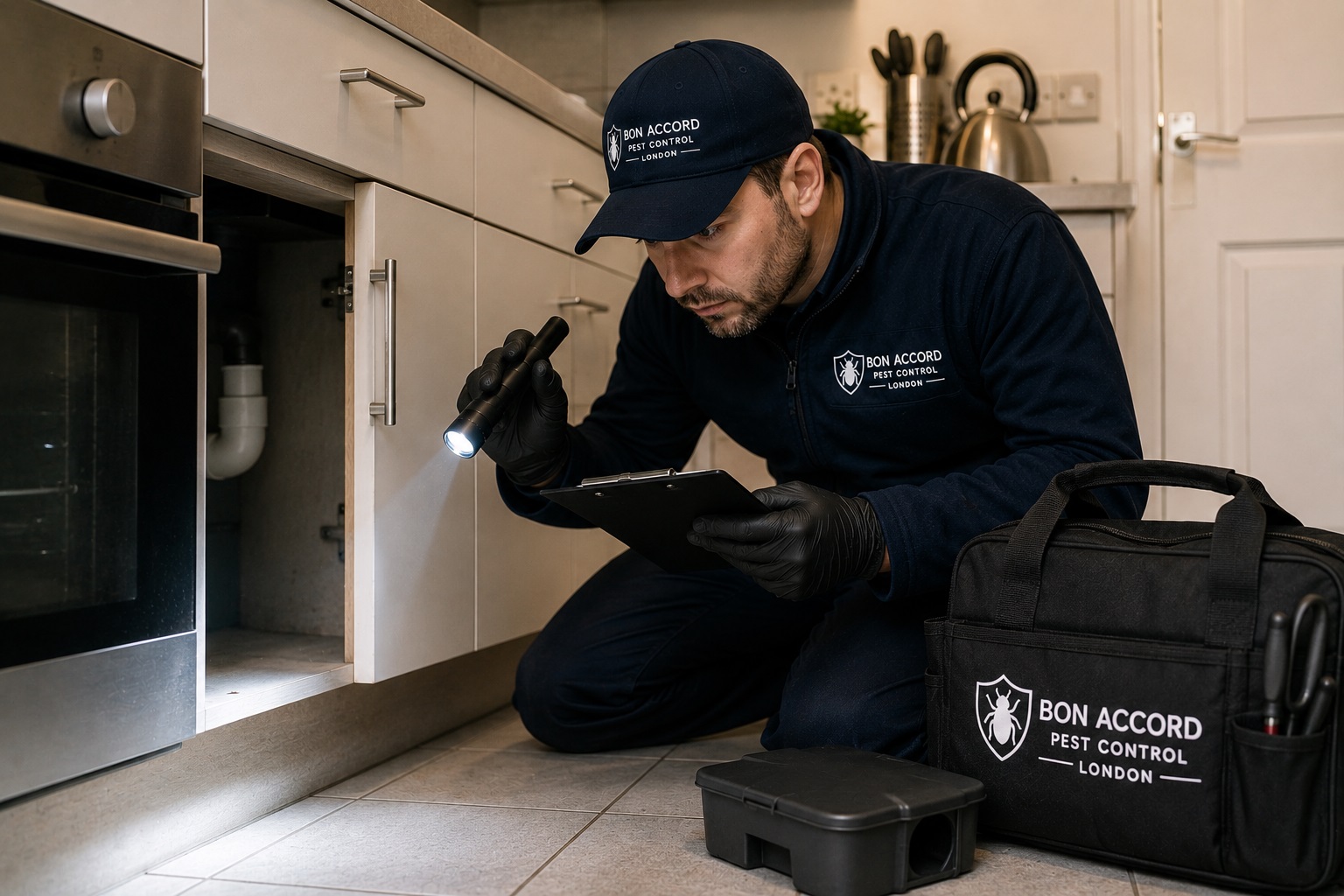
Professional mice control may include inspection, species confirmation, safe trap or bait placement, monitoring, entry-point checks, proofing recommendations, hygiene advice and follow-up where needed.
Why bait alone does not solve a mouse infestation
Even the best mouse bait will not solve the problem if mice are still entering the property. A proper mouse-control strategy must identify routes, entry points, food sources, harbourage areas and proofing requirements.
Common mouse bait mistakes
These mistakes are the main reasons DIY trapping often fails.
Too much bait
Large amounts allow mice to feed from the edge without triggering the trap.
Wrong placement
Traps in open spaces usually perform worse than traps along active routes.
Food left out
Alternative food makes traps less attractive and supports ongoing activity.
Too few traps
One trap is rarely enough if activity is established in a kitchen or flat.
Ignoring entry points
New mice can enter through the same gaps if proofing is not addressed.
Unsafe placement
Traps or rodenticides must not be accessible to children, pets or non-target animals.
Best bait for mice in flats
In flats, mice may travel through service risers, pipe boxing, wall cavities, gaps behind kitchens, communal areas, bin stores, neighbouring flats and underfloor voids.
Bait and traps inside one flat may not solve the problem if mice are entering from a communal route. Landlords or managing agents may need to investigate wider access points.
Best mouse bait for commercial premises
For restaurants, cafés, hotels, offices, retail units and food premises, bait choice is only one small part of the control strategy. Commercial mouse control should include inspection, monitoring, safe trap or bait-station placement, waste management advice, proofing recommendations and follow-up.
When to call Bon Accord Pest Control
Call Bon Accord if you have seen a mouse indoors, found droppings, heard scratching, traps keep failing, activity returns after DIY treatment, or the property is rented or commercial.
- Inspection and identification.
- Safe treatment strategy.
- Entry-point assessment.
- Kitchen and pipe-route checks.
- Proofing advice.
- Follow-up and prevention where needed.
Need mice control in London?
If you are searching for the best bait for mice, there is a good chance you have already seen droppings, heard scratching or noticed signs of activity. Bait may catch individual mice, but it will not stop new mice entering through an open route.
London office: 020 3369 6965 | Freephone: 0800 211 8868 | Email: contact@bonaccordpestcontrol.co.uk
FAQ: best bait for mice
The best bait for mice is usually peanut butter, chocolate spread, hazelnut spread, soft chocolate, seeds or nut paste. Use a very small amount and place the trap along a wall or known mouse route.
For house mice, sticky, high-smell baits such as peanut butter or chocolate spread usually work well. However, placement is more important than bait alone.
The best bait for a mouse trap is a pea-sized amount of sticky bait that cannot be easily stolen. Peanut butter and chocolate spread are good examples.
Good mouse trap bait includes peanut butter, chocolate spread, hazelnut spread, soft chocolate, seeds and cereal mixed with sticky bait.
The best food to catch mice is usually high-energy food with a strong smell, such as peanut butter, chocolate spread, nut paste or soft chocolate.
Peanut butter is one of the best mouse trap baits because it is sticky, high in fat and has a strong smell. Use only a small amount.
Cheese can work, but it is usually not the best bait. Peanut butter, chocolate spread and nut paste are often more effective.
Mice may take bait without being caught if too much bait is used, the bait is loose, the trap is badly positioned, the trigger is not sensitive enough or the trap is not on the mouse route.
Use a very small amount, roughly pea-sized. Too much bait can allow mice to feed without triggering the trap.
Place mouse traps along walls, behind appliances, under sinks, near droppings, near pipe routes and close to known mouse activity. The trigger end should face the wall.
A small amount of bait on a trap is unlikely to create a new infestation, but accessible food, crumbs, pet food, rubbish and open packaging can attract and support mice.
For kitchens, peanut butter, chocolate spread, cereal mixed with sticky bait or nut paste can work. More importantly, remove competing food and place traps along mouse routes.
Poison bait should be used carefully and safely. If you are not sure how to use traps or poisons correctly, seek professional advice.
Call pest control if you see mice indoors, find droppings, hear scratching, traps keep failing, activity returns after DIY treatment, or the property is a rental or commercial premises.
When it comes to catching mice, bait is essential. The type of bait you use will determine whether or not you are successful in trapping a mouse. Some of the most common types of bait used for catching mice include cheese, peanut butter, oatmeal, and even fruits and vegetables. Depending on the type of mouse you are trying to catch, different baits may be more effective.
The best baits to use for catching mice in the UK are a combination of food, water, and nesting materials.

Food
Peanut butter is a popular bait for trapping mice in the UK. It provides a strong smell and offers a treat that most mice find irresistible. Seeds, chocolate, and bacon can also be used as bait. Make sure that the bait is fresh and that it is placed on the trap in a way that the mice will be able to access it.
Water
Mice need access to water in order to survive, so it is important to provide them with a source of water when setting a trap. You can do this by placing a shallow dish of water near the trap.
Nesting Materials
Mice also need materials to build their nests. Cotton wool, shredded paper, and shredded fabric can all be used as nesting material. Place the nesting material near the trap to attract the mice.
Once you have set the trap, it is important to check it regularly to make sure it is working correctly. If the trap is not working, you may need to adjust the bait or the placement of the trap. It is also important to dispose of the trapped mice in a humane manner.
Dealing With Mouse Infestation | What bait to use for catching mice?
When dealing with a mouse infestation, traps are one of the most effective tools you have for reducing the number of mice in your home. There are several different types of mousetrap available that capture or kill mice when triggered. Some of these rely on strategic positioning; you need to place them where mice won’t be able to avoid stepping on them and activating them.

However, many traps are baited, meaning they use a small amount of food placed on a bait plate to lure mice in. When the mouse moves in to investigate the food, they will activate a small pressure plate that triggers the trap.
Bait traps
Bait traps can be very effective, but they are only as effective as the bait you choose. If you bait them with something that mice have no interest in and don’t want to eat, they won’t move in closer to investigate. On the other hand, if you can find something that mice find irresistible to load them with, you have a reliable trap that will lure mice in.
A dollop of peanut butter is one of the most effective types of bait there is. Not only do they find it irresistible because it’s full of energy, but its consistency means it takes them a while to eat; there’s no chance of them snatching it away without setting off the trap.
Mice are also fond of seeds and nuts. Pumpkin and sunflower seeds work very effectively as bait, but they can be hard to lay in some traps. However, for humane traps, sprinkling a spoonful of sunflower seeds is very effective. Mice love seeds because they provide lots of nutrition, and they can easily carry them back to their nests to store for later.
How To Get Rid of mice
Read more about pest control services for mice in London
Pest advice for controlling Mice from BPCA
Other Pests
Experts and professionals suggest that homeowners take note of what carpet moth eggs look like to help them identify a potential infestation. Knowing the size, shape, and colour of the eggs can help homeowners take the necessary steps to control or eliminate a carpet moth infestation quickly, before the eggs have had a chance to hatch and the moths have had a chance to spread.
Bed Bugs
For anyone living in London looking for reliable and effective Bed Bug Pest Control, our professional advice is to contact a licensed and certified pest control service provider like Bon Accord to ensure the safety of your home and family.
The most common household pests in London, such as bed bugs, cockroaches, mice, and more, are a nuisance to homeowners, but luckily, there are some effective pest control solutions to help them get rid of these pests and keep their homes pest-free.
If you’re wondering “How to Know if You Have Bed Bugs?“, learn what to look for like tiny black spots in bedding, reddish-brown stains on mattresses, and a sweet musty odour that can help you identify a bed bug infestation in your home.
Booklice
If you’re looking for an effective way to quickly and easily get rid of booklice in your home, then be sure to check out our comprehensive guide on How To Get Rid Of Booklice, which provides a step-by-step guide to help you rid your home of these pesky pests.
Spiders
For anyone looking to learn about common spiders found in the UK, this guide provides a comprehensive overview of the many different species of UK spiders, including the types of spiders most commonly encountered in homes and gardens across the country.
This article provides readers with a comprehensive guide to False Widow Spiders in the UK, including identification tips, facts, and information on how to minimise the risk of encountering and being bitten by these venomous spiders.
If you’re looking for control and removal services for the Yellow Sac Spider, look no further than our professional team of experts who specialise in Yellow Sac Spider Control and Removal.
Pest Control Prices
For Londoners searching for the most competitive pest control prices and services, it is important to compare the costs and services of local pest control companies to ensure they receive the best value for their money. Londoners should read reviews and compare the prices of local pest control companies to make an informed decision.