Rodent droppings, hygiene and health-risk guidance
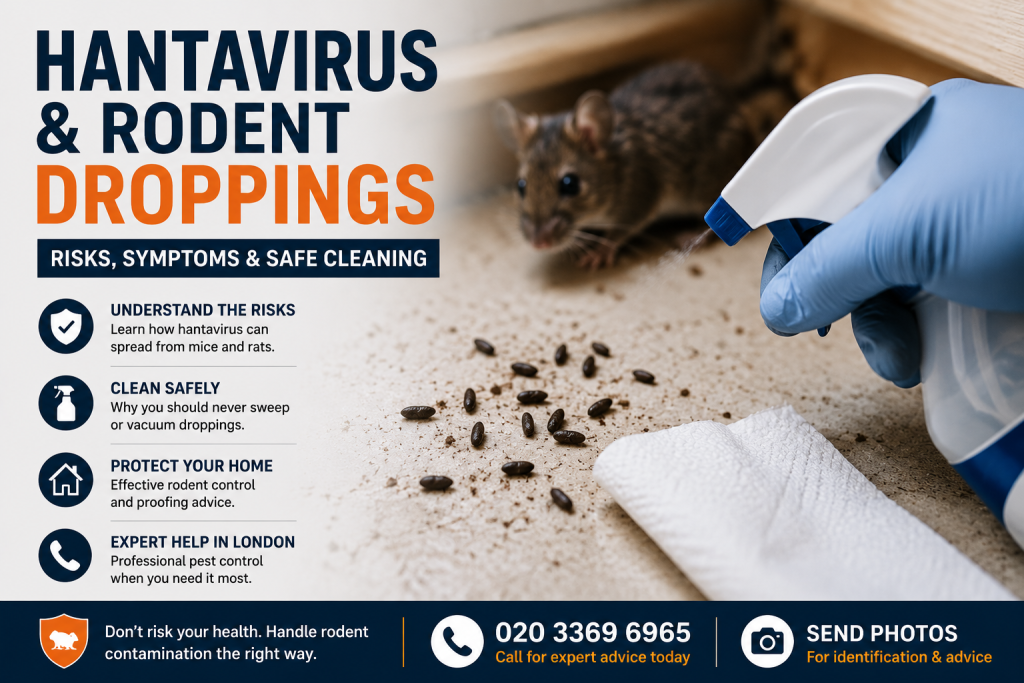
Hantavirus and Rodent Droppings: Risks, Symptoms and Safe Cleaning
Finding mouse or rat droppings in a property should always be taken seriously. In most UK homes, rodent droppings are more commonly a sign of an active mouse or rat problem than a medical emergency. However, rodent urine, droppings, saliva and nesting material can carry health risks and should be handled carefully.
This guide explains what hantavirus is, why rodent droppings should not be swept or vacuumed, how small amounts of contamination should be cleaned safely, and when professional rodent control or contamination advice is needed.
Important: this page is general pest hygiene guidance and does not replace medical advice. If someone feels unwell after possible rodent exposure, contact NHS 111, a GP or emergency services depending on severity.
Hantavirus and Rodent Droppings: The Practical UK Message
Hantavirus is rare in the UK, but rodent droppings, urine, saliva and nesting material should still be treated as contaminated material. The safest approach is calm, practical and evidence-based: avoid dry cleaning, disinfect before removal, monitor for new activity and call a professional when contamination is heavy, recurring or in a food area.
Do Not Panic
Finding droppings does not automatically mean someone will become ill. The bigger issue is usually active mice or rats.
Do Not Sweep or Vacuum
Dry sweeping or vacuuming can disturb contaminated particles and should be avoided.
Clean Small Areas Safely
Wet droppings with disinfectant, allow contact time, then remove carefully with disposable materials.
Stop Rodents Returning
Cleaning alone does not fix the cause. Rodent control and proofing may be required.
Understanding the risk
What Is Hantavirus?
Hantaviruses are a group of viruses carried by rodents such as mice, rats and voles. Rodents may carry the virus without appearing ill, and people can become exposed through contaminated droppings, urine, saliva or nesting material.
The main concern is not simply seeing droppings. The risk increases when contaminated material is disturbed, especially in enclosed spaces, because dust or particles may become airborne.
For pest control purposes: rodent droppings should be treated as contaminated material and cleaned using safe wet methods, not dry sweeping or vacuuming.
Recent news context
Why Was Hantavirus in the News Recently?
Hantavirus was recently reported in connection with an outbreak linked to cruise ship travel. This was an unusual international incident and should not be interpreted as meaning that every UK home with mouse droppings has a high hantavirus risk.
The correct takeaway is practical: rodent contamination should be respected, handled carefully and not disturbed in a way that creates dust or airborne particles.
Unusual Outbreak
Recent news involved a specific outbreak context, not a normal UK household situation.
UK Risk Is Generally Low
Hantavirus is rare in the UK, but rodent contamination should still be cleaned safely.
Safe Cleaning Still Matters
The news is a useful reminder not to sweep, vacuum or disturb rodent droppings dry.
Exposure routes
Can Hantavirus Spread from Rodent Droppings?
Hantavirus can be associated with infected rodent droppings, urine and saliva. Exposure may happen when contaminated material dries out and is disturbed, when contaminated dust is breathed in, or when contaminated surfaces are touched and then the mouth, nose or eyes are touched.
Sweeping, brushing, vacuuming or shaking contaminated items can disturb particles.
Nesting Material
Rodent nests may contain urine, droppings, saliva, hair and contaminated soft materials.
Enclosed Spaces
Lofts, cupboards, basements, sheds and voids can contain settled contaminated dust.
Surface Contact
Contaminated surfaces should be disinfected and handled with gloves and good hygiene.
Balanced UK advice
Is Hantavirus Common in the UK?
Hantavirus is rare in the UK. That means a calm and balanced approach is needed: do not panic because you have found mouse droppings, but do not ignore rodent contamination either.
For London properties, the more common practical issue is an active mouse or rat infestation, hidden entry points, droppings in kitchens or lofts, and inadequate proofing.
Do not panic because droppings are present.
Do not sweep or vacuum dry droppings.
Clean small contamination safely.
Call a professional where contamination is heavy, recurring or in difficult areas.
London Properties
Flats, terraces, restaurants, lofts and managed buildings can all develop recurring rodent contamination if access points remain open.
Medical warning signs
Hantavirus Symptoms: When to Seek Medical Advice
This page is pest hygiene guidance, not medical advice. If someone feels unwell after possible rodent exposure, they should contact NHS 111, a GP or emergency services depending on the severity of symptoms.
Flu-like Symptoms
Fever, severe tiredness, muscle aches, headache or feeling very unwell after possible rodent exposure.
Digestive Symptoms
Nausea, vomiting, diarrhoea or stomach pain after possible exposure should be discussed with a medical professional.
Breathing Symptoms
Shortness of breath or worsening breathing symptoms should be treated urgently.
Medical advice: tell the medical professional about any possible contact with mouse or rat droppings, urine, nesting material or rodent-infested spaces.
Most important safety rule
Why You Should Not Sweep or Vacuum Rodent Droppings
Do not sweep, vacuum or dry-brush rodent droppings, urine or nesting material. Dry cleaning can disturb contaminated dust and particles. This applies to both mouse and rat droppings.
No Dry Sweeping
Do not use a broom, dry brush or dry cloth on rodent droppings or nesting material.
No Household Vacuum
A normal vacuum can disturb and spread contaminated particles.
No Compressed Air
Never blow dust from contaminated areas, cupboards, sheds, lofts or storage items.
No Shaking Materials
Avoid shaking insulation, stored items, bedding, boxes or nesting material.
The safest general principle is: wet first, disinfect, allow contact time, then remove carefully.
Safe clean-up method
How to Clean Small Amounts of Rodent Droppings Safely
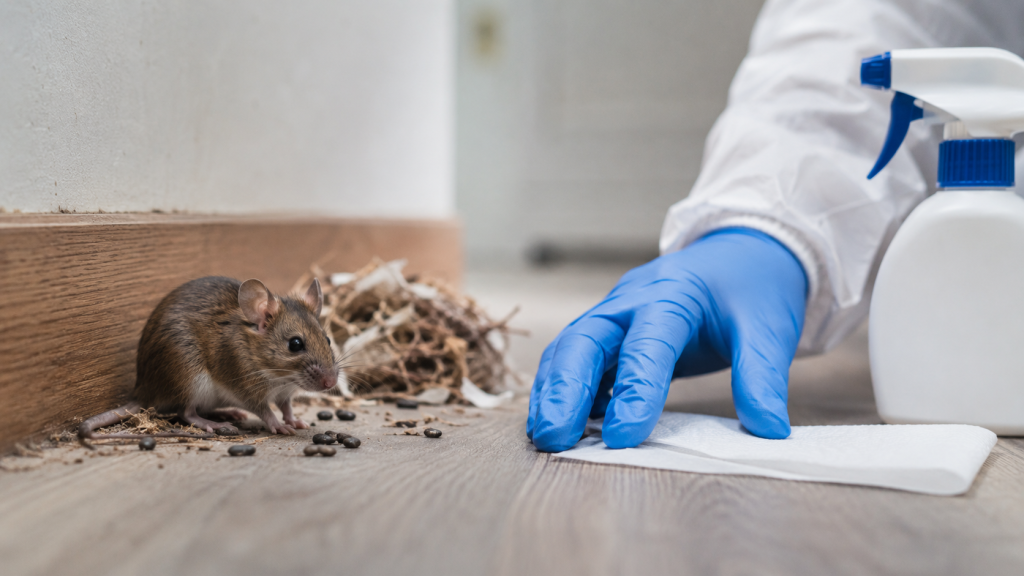
For a small amount of mouse or rat droppings on a hard surface, use a careful wet-cleaning method rather than dry sweeping or vacuuming.
1
Keep People and Pets Away
Do not allow children, pets or vulnerable occupants into the affected area.
2
Ventilate if Safe
Open windows or doors if practical, but avoid creating draughts that blow dust around.
3
Wear Disposable Gloves
Use disposable gloves before touching contaminated surfaces or cleaning materials.
4
Wet with Disinfectant
Spray the droppings and surrounding area with a suitable disinfectant until wet.
5
Wipe with Paper Towels
Use disposable paper towels to pick up the wet droppings and cleaning material.
Bag waste safely, disinfect the surface again and wash hands thoroughly afterwards.
When to get help
When Rodent Contamination Needs Professional Cleaning
Professional help may be safer where contamination is more than a small, isolated amount, especially in food areas, lofts, rental properties, commercial premises or hard-to-access spaces.
Kitchens and Food Areas
Droppings near food, cupboards, worktops, stockrooms or commercial kitchens should be handled carefully.
Loft Insulation and Voids
Droppings mixed with insulation, dust, nesting material or urine contamination may require professional assessment.
Heavy or Recurring Contamination
If droppings keep returning after cleaning, rodents are likely still active and entry points need investigation.
Mouse or rat?
Mouse Droppings, Rat Droppings and Other Rodent Contamination
Mouse Droppings
Mouse droppings are usually small, dark, pellet-like and often pointed at the ends. They are commonly found in kitchens, cupboards, under sinks, behind appliances, lofts and along skirting boards.
Rat Droppings
Rat droppings are usually larger, thicker and more capsule-shaped. They may be found in gardens, basements, drains, lofts, bin areas, kitchens, wall voids or along regular rat routes.
Other Contamination
Rodent contamination can also include urine, grease marks, gnawed packaging, nesting material, contaminated insulation, odour, dead rodents and food contamination.
The source must be solved
Why Cleaning Alone Is Not Enough
Cleaning removes contamination, but it does not solve the cause. If mice or rats are still entering the property, new droppings will continue to appear.
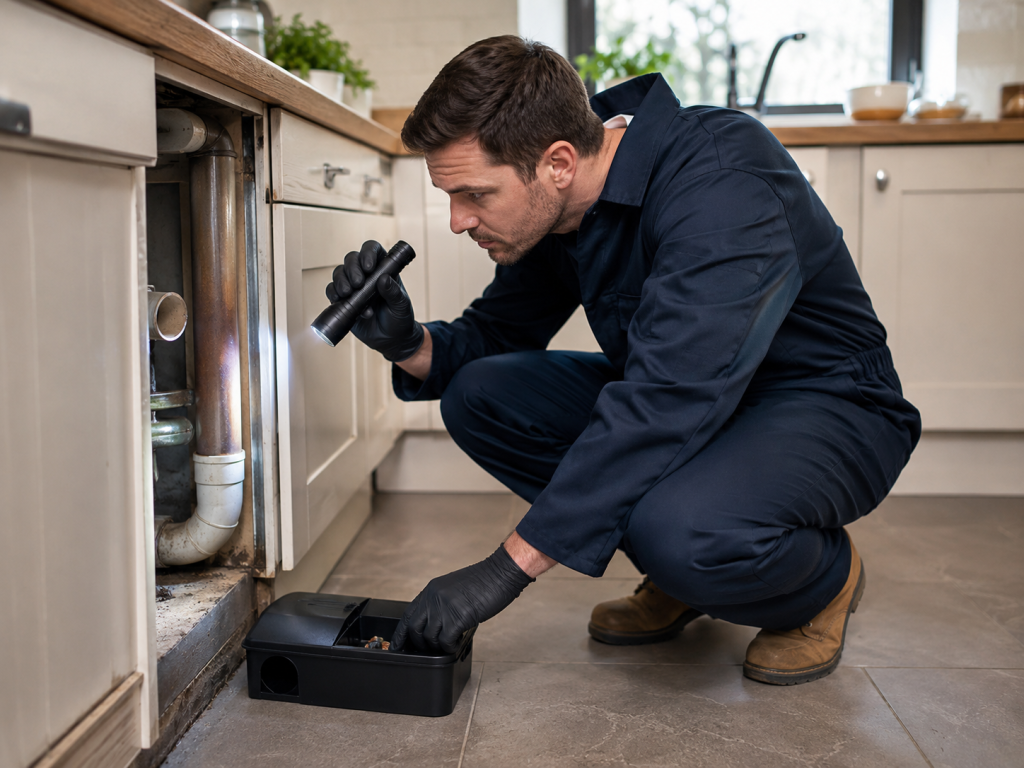
Identify the Rodent
Confirm whether the issue is mice, rats, squirrels, bats or another source of contamination.
Use appropriate control methods based on species, property type and activity level.
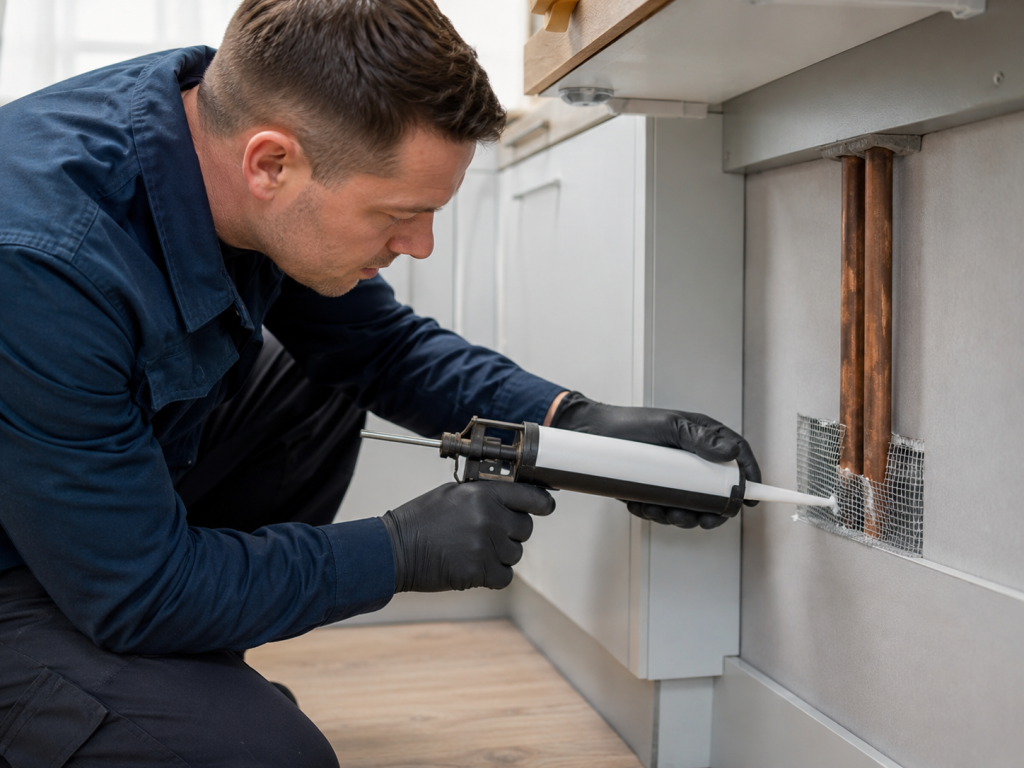
Proof Entry Points
Seal gaps properly once the activity route is understood and the timing is right.
Prevention
Rodent Control and Proofing: Reducing Future Risk
Rodent proofing helps reduce the chance of droppings returning. For mice, very small gaps can be enough. For rats, drains, broken pipework, damaged walls, gardens, basements and external defects may also need investigation.
Proofing should be done properly and at the right stage. Sealing holes without understanding the route can trap rodents inside walls, ceilings, floors or voids.
Professional Rodent Contamination Advice in London
Bon Accord Pest Control can help with mouse droppings identification, rat droppings identification, rodent activity inspection, safe visible droppings removal advice, disinfection guidance, mouse control, rat control, rodent proofing, drain checks and follow-up monitoring.
We help homeowners, tenants, landlords, managing agents, restaurants, cafés, offices and commercial premises across London.
Hantavirus is a group of viruses carried by rodents such as mice, rats and voles. People can be exposed through rodent droppings, urine, saliva or contaminated nesting material.
Hantavirus can be associated with infected rodent droppings, urine and saliva. The main practical risk is disturbing contaminated material and breathing in particles.
Yes, infected rodents can shed virus in droppings, urine and saliva. Whether droppings are from mice or rats, they should be treated as contaminated material.
Symptoms can include fever, severe tiredness, muscle aches, stomach pain, nausea, vomiting, diarrhoea or shortness of breath. If someone feels unwell after possible rodent exposure, seek medical advice.
Finding droppings alone does not automatically mean you need medical care. If you feel unwell after possible rodent exposure, contact NHS 111, a GP or emergency services depending on symptoms.
Most hantaviruses are linked to rodent exposure. Andes hantavirus is unusual because person-to-person transmission has been reported, but this is not the typical concern for UK household rodent contamination.
Keep children and pets away, avoid sweeping or vacuuming, discard contaminated food packaging where needed, disinfect hard surfaces safely and investigate how rodents are entering.
Call a specialist if droppings keep returning, contamination is heavy, food areas are affected, you hear scratching, you see mice or rats, or you cannot find the entry point.
We thought we had bedbugs but could find no evidence apart from what we thought were bites. I called Bon Accord and Gabriel was there within a couple of hours. He told us we had carpet beetle. Finding the evidence and showing us photos of the skin reaction which was exactly what we had. He advised and returned at a time to suit us to spray which was done thoroughly and efficiently. No sign of the little critters returning. Thank you Gabriel.
Gabriel went above and beyond. He is extremely knowledgable and very efficient at what he does. The results were outstanding. Nothing is too much for him. Delighted with his professionalism and work.
Top-notched pest control service!! Went above and beyond to eradicate the rats from our property. Gabriel even offered to further investigate the infestation issues for our neighbours. We found him to be extremely professional and easy to work with. We highly recommend Gabriel to anyone in need of pest control.
Gabriel was absolutely wonderful, a real life saver when I found a mouse by my bed at 10pm. He came in less than an hour and was able to catch the mouse and put my mind at rest so I could go to sleep! Highly recommend, fab service and lovely people.
Gabriel turned up with an hours notice one evening and immediately identified the issued. He works efficiently and professionally throughout with timely follow-ups to ensure the problem was resolved. Once completed he was kind enough to continue to check in to see that the issue had gone. Having had Rentokil previously that spent two years doing very little this was a complete breathe of fresh air and solved the problem in less than two weeks. We are grateful and would highly recommend his services.
We were lucky to have found Bon Accord, they responded very fast to our request and Gabriel was very helpful and informative. He made several visits and did his absolute best until the mice problem we had was gone. Highly recommended.