Do Wasp Nests Need to Be Removed?
A calm, practical guide explaining when a wasp nest can be left alone, when treatment is needed, and when physical nest removal is actually necessary.
Quick answer
Do wasp nests need to be removed?
No, not always. A wasp nest only needs action if it is active and causing a risk, nuisance or access problem. In many cases, an active nest can be professionally treated without physically removing the nest structure. Once the colony is no longer active, the remaining nest is usually harmless.
An old, inactive nest does not normally need treatment or removal. Wasps do not usually reuse old nests the following year, although a new queen may choose a similar sheltered location if the building still has suitable gaps or voids.
| Situation | What to do |
|---|---|
| Active nest near people, pets, entrances or work areas | Arrange professional wasp nest treatment. |
| Active nest in a loft, roofline, wall cavity or shed | Do not disturb it; get professional advice. |
| Old nest with no activity in winter or early spring | Usually no treatment needed. |
| Visible old nest causing concern | Optional removal if safe and accessible. |
| Hidden wall cavity nest after treatment | Usually no physical removal required. |
| Nest far away in a rarely used garden area | May be monitored if not causing risk. |
| Nest affecting a restaurant, school, hotel or care setting | Professional assessment recommended. |
Treatment and removal are not the same thing
Many people use the phrase “wasp nest removal” when they actually mean “getting rid of the active wasps”. These are not always the same thing.
Wasp nest treatment
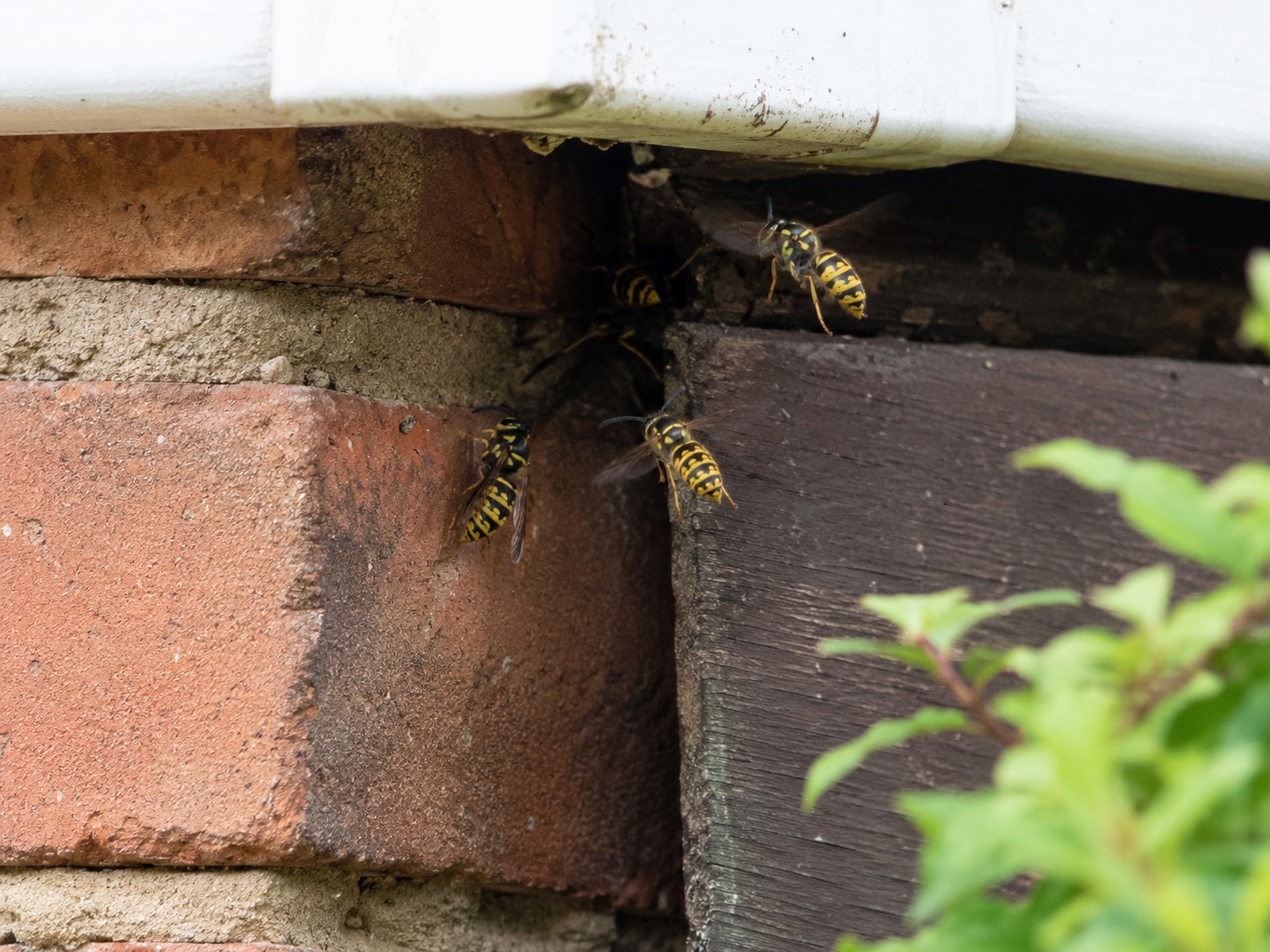
Treatment means dealing with the active colony so wasp activity stops. This is often the correct solution when the nest is hidden in a loft, roof void, wall cavity, air brick, soffit, shed or inaccessible part of the building.
Physical nest removal
Physical removal means taking away the nest material after the colony is inactive. This may be useful if the nest is visible, accessible and causing concern, or if the area needs to be cleared for repairs.
Why this matters
Trying to physically remove an active nest can be dangerous. The priority is to assess the activity, treat the active nest where needed, then decide whether removal adds real value.
Active wasp nest or inactive wasp nest?
Before deciding whether a nest needs treatment or removal, you need to know whether it is active. Do not rely only on a quick glance, because some nests can appear quiet at certain times of day.
| Active nest signs | Inactive nest signs |
|---|---|
| Repeated wasp traffic through the same hole or gap. | No wasps entering or leaving. |
| Wasps around a roofline, soffit, air brick or wall cavity. | The nest was found in winter or early spring. |
| Buzzing or rustling from a void, ceiling or wall. | The nest is dry, dusty, damaged or abandoned. |
| Wasps appearing indoors from a loft hatch, window frame or vent. | There is no buzzing, movement or fresh activity. |
| Visible papery nest with wasps moving around it. | The nest is visible but undisturbed and quiet. |
Do wasps reuse old nests?
Wasps do not normally reuse an old nest. A typical wasp nest is a seasonal structure. The colony grows through spring and summer, then dies out later in the year, leaving only new queens to hibernate elsewhere.
This means an old nest found in winter or early spring is usually inactive and does not need treatment. If it is safely accessible and you want it removed for reassurance, it can sometimes be taken away, but removal is often optional rather than necessary.
When can a wasp nest be left alone?
A wasp nest may be left alone if it is not causing a risk and is well away from people. Wasps can be beneficial because they help control other insects. If a nest is not causing risk or nuisance, treatment may not be necessary.
- The nest is far from the house.
- It is in a rarely used part of the garden.
- There are no children, pets or vulnerable people nearby.
- No one needs to work close to the nest.
- It is not near a doorway, patio, window or path.
- It is not affecting a business or public area.
- The nest is old and inactive.
- There is no wasp traffic entering the property.
A nest in a quiet part of a large garden is very different from a nest above a front door, inside a loft, by a restaurant terrace or close to a children’s play area.
When should a wasp nest be treated?
A wasp nest should usually be professionally assessed or treated when it is active and close to people, pets or property access points.
- Near a front door or back door.
- Close to a window or balcony.
- Near a patio, garden seating area or outdoor dining space.
- Inside a loft or roof void.
- Entering through a wall cavity or air brick.
- In a shed, garage or outbuilding used regularly.
- Near children, pets, elderly people or vulnerable occupants.
- Affecting a school, nursery or care setting.
- Affecting staff or customers at a business.
- Close to builders, roofers, gardeners or maintenance work.
- Causing wasps to enter the living space.
- Likely to be disturbed.
Does a treated wasp nest need to be physically removed?
Usually, no. After professional treatment, the colony should die out and activity should stop. The remaining nest material is often left in place, especially if it is hidden inside a wall cavity, roof void or inaccessible area.
| Physical removal may be considered if… | Physical removal is often unnecessary if… |
|---|---|
| The nest is visible and easy to access. | The nest is hidden in a cavity. |
| It is in a loft and the client wants reassurance. | Removal would damage the property. |
| It is blocking access for repairs. | There is no activity after treatment. |
| It is inside a shed or outbuilding that needs clearing. | The nest is old and inactive. |
| The area is being opened anyway for building work. | The nest is not causing any practical issue. |
The best approach is to treat activity first, then assess whether removal adds any real value.
Wasp nest in loft: should I leave it alone?
A wasp nest in a loft should not be disturbed. Whether it needs treatment depends on whether it is active and where it is located.
Active loft nest
An active loft nest should usually be assessed professionally, especially if wasps are entering near the roofline, appearing through the loft hatch, entering bedrooms or affecting access to stored items, tanks, wiring or insulation.
Old inactive loft nest
An old nest found in winter or spring with no wasp activity often does not need treatment. If it is visible and accessible, removal may be optional.
Wasp nest in a wall cavity, roofline or air brick
Wall cavity and roofline nests are very common in London properties. You may not see the nest itself. Instead, you may see wasps repeatedly entering a gap under a tile, soffit, fascia board, air brick, crack in brickwork, pipe opening or roofline void.
Do not block the hole. Blocking the entrance can force wasps further into the structure or cause them to find another route into the property.
If the nest is hidden inside a cavity, removing it may require opening walls, ceilings or roof areas. That is usually unnecessary if professional treatment has stopped the activity.
Wasp nests in sheds, garages, gardens, hedges and trees
Sheds, garages and outbuildings are common places for wasp nests because they are sheltered and often undisturbed. A garden nest does not always need treatment, but it may need action when it is close to people or likely to be disturbed.
Sheds, garages and outbuildings
Treatment may be needed if the area is used regularly, children or pets use the garden, the nest is close to a doorway, stored items need clearing, or repairs are planned.
Gardens, hedges and trees
Treatment may be needed near children’s play areas, patios, barbecues, paths, gates, pet areas, hedges that need cutting, decking, compost bins or vulnerable people.
Wasp nest near a restaurant, café or outdoor dining area
For restaurants, cafés, pubs, hotels and outdoor dining spaces, wasp activity should be handled promptly and professionally.
A nest may need treatment if wasps are affecting customers, staff, outdoor seating, entrances, bin stores, food preparation areas, delivery areas, terraces, beer gardens, hotel gardens or commercial waste points.
Do not rely on random spraying around customer areas. The source should be identified. If there is an active nest nearby, the safest solution is targeted professional treatment and clear aftercare advice.
Wasp nest in a rental property or managed building
Landlords, managing agents and block managers should treat wasp reports seriously, especially where tenants, residents, cleaners, gardeners, maintenance contractors or visitors may be affected.
- Loft spaces
- Balconies
- Communal gardens
- Rooflines
- Bin stores
- Service areas
- Entrances
- Garages
- Bike stores
- Sheds
- Courtyards
- External walls
- Converted flats
- Mansion blocks
- HMOs
Useful links: Wasp Nest Removal London, Property Management Pest Control London and Block Management Pest Control London.
Wasps or bees? Check before treatment
Before any treatment is arranged, it is important to check whether the insects are wasps or bees. Wasps and bees are often confused, but the correct response can be different. Bees are important pollinators and should not be treated as wasps.
| Feature | Wasps | Bees |
|---|---|---|
| Body | Slimmer, smoother body with narrow waist. | Often hairier and rounder. |
| Colour | Strong yellow and black markings. | Brown, golden or black depending on species. |
| Behaviour | Often attracted to sweet food and waste later in season. | Often focused on flowers, pollen or hive activity. |
| Nest | Papery nest made from chewed wood pulp. | Wax combs or bee-specific structures. |
| Treatment | Active risky nests may need pest control. | Bee issues require different assessment. |
What not to do with a wasp nest
Do not block the entrance
Blocking the entry point can force wasps into the building and make treatment more difficult.
Do not knock the nest down
Even a small active nest can contain defensive wasps.
Do not burn the nest
Wasp nests are made from papery material. Fire can cause serious injury and property damage.
Do not flood the nest
Water can damage the property and disturb the colony.
Do not spray from close range
DIY spray can be dangerous if you are close to the nest, on a ladder, in a loft or near a hidden cavity.
Do not treat bees as wasps
If the insects are bees, the correct advice is different.
Do wasp traps solve a nest problem?
Wasp traps may reduce a small number of foraging wasps around food or bins, but they do not remove an active nest.
A trap does not deal with the colony, the queen, the larvae or the nest structure. If wasps are repeatedly entering and leaving one roofline, wall gap, loft, shed or cavity, the issue is likely to be the nest, not just stray wasps.
What should I do if I find a wasp nest?
Stay calm
Keep people and pets away from the nest area.
Do not disturb it
Do not block, spray, knock, flood or burn the nest.
Watch safely
Look from a safe distance to see whether wasps are entering and leaving.
Send photos
Take a photo or short video only if it is safe to do so.
Check whether the insects are wasps or bees, avoid gardening or building work near the nest, and contact professional pest control if the nest is active and close to people or property access points.
When should you call Bon Accord Pest Control?
Call Bon Accord if the nest is active, wasps are close to doors, windows, patios or balconies, wasps are entering the loft or living space, the nest is in a wall cavity or roofline, or the nest is affecting a restaurant, hotel, school, nursery or workplace.
- Children, pets, elderly people or vulnerable occupants are nearby.
- Someone may be allergic to wasp stings.
- Builders, roofers, gardeners or cleaners need to work near the nest.
- You are unsure whether the nest is active.
- You are unsure whether the insects are wasps or bees.
- You need professional advice before deciding whether removal is necessary.
Bon Accord can advise whether the nest needs treatment, removal, monitoring or no action.
What to send before booking
To help us assess the nest, send:
- Your postcode.
- A photo or short video of wasp activity.
- The exact entry point if visible.
- Whether the nest is in a loft, roofline, wall, shed, garden or commercial area.
- Whether the nest is visible or hidden.
- Whether people or pets are close to the nest.
- Whether the insects are entering the property.
- Whether anyone has already sprayed, blocked or disturbed the nest.
- Whether ladders or special access may be needed.
- Whether the property is residential, rental, managed or commercial.
The most useful video is not a close-up of individual wasps. It is a safe-distance video showing the repeated flight path into and out of the nest entry point.
Prevention: how to reduce future wasp nesting risk
You cannot guarantee that wasps will never nest at a property, but you can reduce the chance of suitable nest sites.
- Inspect rooflines in spring.
- Repair damaged soffits and fascia boards.
- Seal suitable gaps when no nest is active.
- Check air bricks and external vents.
- Check loft spaces early in the season.
- Repair holes around pipes and service penetrations.
- Keep sheds and garages tidy.
- Keep bins closed and clean food waste areas.
- Train staff to report repeated wasp flight paths.
Prevention should only be carried out when there is no active nest in the area being sealed or repaired.
Summary: should you remove a wasp nest?
| Leave it alone or monitor if… | Arrange professional treatment if… | Consider physical removal after treatment if… |
|---|---|---|
| It is old and inactive. | The nest is active. | The old nest is visible and accessible. |
| There is no wasp activity. | Wasps are close to people, pets or entrances. | The client wants reassurance. |
| It is far from people. | The nest is in a loft, roofline or wall cavity. | Repairs or building work require clearance. |
| It is in a rarely used part of the garden. | Wasps are entering the building. | The nest is inside a shed, loft or outbuilding that needs clearing. |
Need advice about a wasp nest in London?
If you are unsure whether a wasp nest needs to be removed, send Bon Accord a photo or short video. We can advise whether the nest appears active, whether treatment may be needed, and whether physical removal is likely to be necessary.
Bon Accord Pest Control Ltd
85 Great Portland Street, London W1W 7LT
London office: 020 3369 6965 | Freephone: 0800 211 8868
Email: info@bonaccordpestcontrol.co.uk / contact@bonaccordpestcontrol.co.uk
Related Bon Accord services and articles
FAQ: Do Wasp Nests Need to Be Removed?
Do wasp nests need to be removed?
Do I need to remove a wasp nest after treatment?
Do wasps reuse old nests?
Can I leave an old wasp nest in the loft?
Should I leave an active wasp nest alone?
Should I block the entrance to a wasp nest?
Is a wasp nest in a wall cavity dangerous?
Is a wasp nest in a loft dangerous?
Can I remove a wasp nest myself?
When is wasp nest treatment needed?
What if I find a large wasp nest in winter?
Are wasps useful?
What should I send before booking wasp control?
Who should I call for wasp nest removal in London?
Do wasp nests need to be removed?
Wasps nest in loft should you leave it alone? Not every wasp nest needs to be physically removed. Active nests near people, pets, entrances, loft access, wall cavities, schools, restaurants or commercial premises should be professionally assessed and usually treated. Old inactive nests often do not need removal.
Wasps in the UK start to be visible in the months of June and July since this is when the colonies are usually fully populated. In the winter, the queen is usually hibernating, and in the spring, the queen emerges looking for a place to build a new nest.
However, once she has chosen a good nest location, this is when the colony expansion begins. Some wasps will carry on building the nest while others search for food to bring back to feed the larvae.

If you have a garden and plan on entertaining during the summer, or you have a food business with an outdoor space and expect to see a lot of customers coming through your doors, the last thing you want is wasps ruining the experience.
If you have noticed a particularly high number of wasps hovering around your premises, it may be that you have a wasp nest nearby. Although your first instinct may be to look up wasp nest removal, is it always necessary, or safe to do so? Below we look at wasps a bit more in-depth and cover what you should do if you discover a wasp nest.
Wasps Nest in Loft: Should I Leave it Alone?
No, you should not leave a wasps nest in your loft alone. Wasps can be dangerous and their sting is painful, so it’s best to take precautions and have it removed by a professional pest control service. Wasps can also cause a lot of damage to your loft, so it’s important to get rid of the nest as soon as possible. If the nest is small, you can try to remove it yourself, but it’s usually best to call a professional. They will be able to safely and quickly remove the nest and help you prevent future infestations.

Wasps are a common problem in the UK and can cause annoyance and distress. Wasps build nests in a variety of locations, including holes in the ground, roof spaces and wall cavities. Generally, a wasp nest will remain active for one season, between early summer and late summer.
However, do wasp nests go away? If left undisturbed, the nest will die out in autumn as the Queen Wasp dies, but if the nest is disturbed, the wasps may build a new nest in a different location. To avoid the risk of anaphylactic shock and the nuisance caused by large numbers of wasps, it is advisable to seek professional advice. Wasp season usually begins in early summer, so it is important to act quickly if you suspect a wasp nest in or around your property.
Common Types of Wasps in the UK
In the UK, there are over 7,000 species of wasp. However, the most common are the Vespula vulgaris (common wasp) and the Vespula germanica (German wasp), and these are the wasps we tend to see in the summer.
They are both yellow with black markings and are similar in size. There is also the red wasp, which nests underground; the tree wasp, which builds its nest both underground and in trees; and the Saxon wasp, which will build a nest in the eaves of houses and outbuildings.
You may also spot the European hornet, which is more common in the South of England. It is the largest wasp in the UK, with a yellow body and dark markings. The sting from a hornet is known to be a lot more painful than that of a common wasp, and it can cause pain and swelling for a good few hours.
How to Identify a Wasp Nest
Wasps nest in loft should i leave it alone? When the wasp queen has chosen a place to start building a nest, she will begin to strip bits of wood from shed walls, fence panels, and garden furniture. So, you may notice little white lines on wooden items near your building, indicating that a nest is nearby.
This wood is then chewed and mixed with saliva and wax to be used as a nest building material. The first piece of the nest will be attached to something sturdy, such as a beam within a roof structure. Next, a stalk called a petiole is built, and cells are built around this, much like the cells seen in a beehive. The nest begins to take shape as a grey or brown balloon-like structure, with a papery finish. The nest will grow in size as more worker wasps are produced. If the nest has been built inside a roof, you may not always be able to spot it.
The Case for Leaving Wasps Alone
If you do discover a wasp nest, before you go ahead and search for ‘wasp nest removers near me’, you may want to consider whether leaving it would be a better idea.
First of all, if you have a nest but the wasps aren’t invading your space, know that it will eventually die off once summer ends anyway. Also, contrary to popular belief, wasps do actually have a purpose.
For one, they are a form of natural pest control since they help to keep the number of crop-eating insects down. They are known to catch black flies and aphids to feed their larvae. Jewel wasps will lay eggs on cockroaches, and when the larvae emerge, they eat the insides of the cockroach, which eventually kills it. Lastly, wasp nests are also used by other creatures such as hoverflies.
Finding an Inactive Wasp Nest – Wasps nest in loft should i leave it alone?
At the end of the summer, wasp colonies tend to die off. At this point, the queen will find a new place to hibernate, leaving her current nest empty. If you find an empty wasp nest, there is no need to take any action, as they are only used for one year.
How to Prevent Wasps from Nesting on Your Property
It is not always possible to prevent wasps from nesting on your property since this would mean sealing all cracks, gaps, and crevices in your building. However, attempting to do this will at least reduce the risk of them finding a way in. In addition, you’ll want to make sure that any areas and receptacles used for food waste are tightly sealed and avoid leaving food and drinks out for any length of time.
Wasp Deterrents and Traps
If you tend to have your windows and doors open in the warmer months, consider using fly screens to prevent wasps from entering your home. You can also use wasp traps filled with sugar water or jam, which can then be placed outside. However, it is important to regularly check and empty any traps as a build-up of dead wasps simply creates a raft for living wasps to make their way back out.
Build your own wasp traps
You can build your own wasp traps with a large drinks bottle. Simply cut the top of the bottle off to make a funnel shape, turn it upside down and place it back in the bottle. Tape it together making sure not to cover the spout. Next, pour a sugar and water mixture into the bottle to about 3 inches in depth. The wasps will be attracted to the sweet smell, and they can fly in through the bottle opening but they will not be able to fly back out.
How to Remove a Wasp Nest
Wasp nest removal. Removing a fully formed wasp nest yourself is never recommended. Although you may find a good few wasps nest removal tips and guides online, they are usually unsafe and ineffective. Obviously, the wasps will try to defend their nest and they will use their venomous sting to do so. The worst thing you can do is try to burn the nest, flood it, or hit it down. Since wasp nests are made from wood pulp, this makes them highly inflammable, and trying to burn one down would risk you suffering severe burns, and also burning down your property. Never try this method.
Effective ways to get rid of the wasps
You may also be told that using water to flood the nest is an effective way to get rid of the wasps. It is not. As well as causing water damage to your property with this method, you will simply aggravate the wasps and they will begin to attack you. And unlike bees, wasps do not die after one sting, so they will simply keep on defending their nest. Although one or two wasps stings are not considered dangerous, a large number of wasp stings can be fatal.
Lastly, hitting a wasp nest down is another removal method you should never try. Since you need to be quite close to the nest to hit it down, the angry wasps will probably start to attack you before you have even started.
Wasp nest in the early stages
However, if you manage to spot a nest in the early stages, when there is only the beginning of a stem, you can try to deter the wasps from making a home there. As long as the queen has left the vicinity, you can try to prevent her from coming back. You can do this by spraying the area with a homemade peppermint or lemon spray. Wasps cannot stand the smell of peppermint and lemon and so it acts as a strong deterrent. It may also be a good idea to purchase a decoy nest. Hang this near to where the new nest was about to be built and it may cause wasps to avoid the area since they will assume there is another colony already established there.
Call in the Professionals

If you want to remove a wasp nest safely and effectively, the best option is to head online and look up ‘wasp exterminator near me’. This should put you in touch with a professional pest control team who can come and investigate the problem. A pest control expert will be professionally trained to remove the nest from any number of places, including inside your roof.
This also means they will have the right safety equipment and personal protective equipment to protect them from falls and stings. They also have access to powerful pest control products that you cannot buy at your local homeware store. These products will be guaranteed to get rid of the wasp colony.
Entertaining in your outdoor space doesn’t necessarily have to be ruined by wasps. If you spot any, make sure you don’t have a wasp nest nearby. If you do, never attempt to remove it yourself, and remember, consider whether it needs to be removed in the first place.

