Fox Den in the Garden? How to Identify Active Fox Dens and Keep Foxes Away Humanely
Finding a possible fox den in your garden can be worrying, especially if it is under a shed, beneath decking, close to a patio, beside a fence, near children’s play areas or close to small pets.
Bon Accord Pest Control Ltd provides discreet pest and wildlife advice across London, helping homeowners, landlords and businesses identify activity, reduce attractants and use humane, lawful deterrent and exclusion methods. For broader pest support, see our London pest control services.
Professional note: do not block, flood or disturb a suspected fox den until you are confident it is not active.
Quick Answer: How Do You Identify a Fox Den?
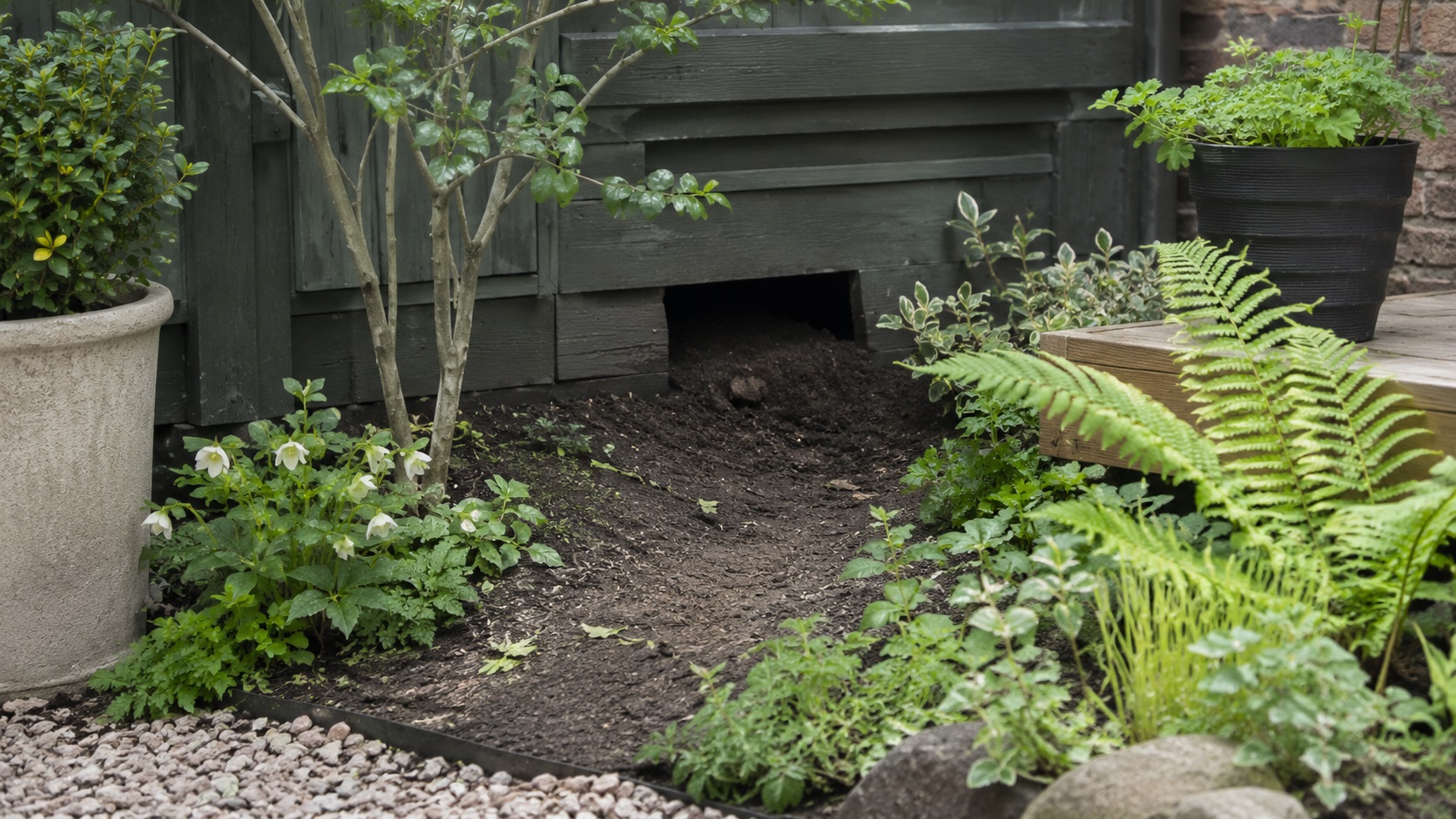
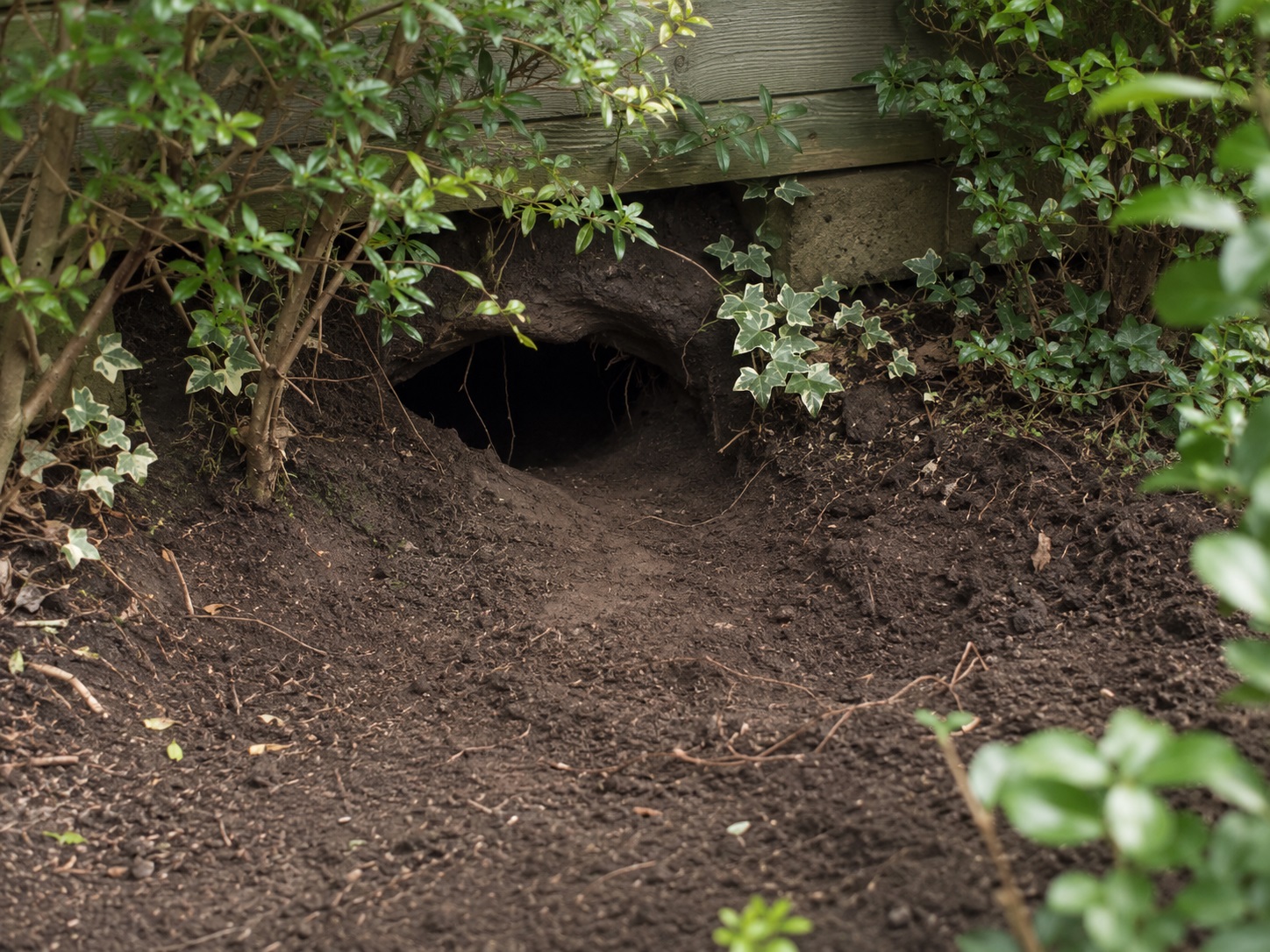
A fox den is usually a larger hole or sheltered void under cover, often under a shed, decking, dense shrubs, tree roots, a bank, outbuilding or old structure. Signs may include freshly dug soil, a worn entrance, strong musky smell, fox droppings, fur, paw prints, repeated fox sightings at dawn or dusk, and cub activity in spring or early summer.
Do not block, flood, disturb or damage a suspected fox den without checking whether it is active. If cubs may be present, wait until they have left, usually later in summer, before excluding access. For urgent safety concerns, seek professional wildlife advice.
What Does a Fox Den Look Like?
A fox den, also called an earth, is usually a sheltered entrance leading to a protected space or burrow. In urban gardens, it may not look like a neat countryside burrow. It may be a gap under a shed, an opening beneath decking, a void behind overgrown plants, or an enlarged hole beside a fence or wall.
A larger opening than a rat hole.
Fresh or disturbed soil outside the entrance.
A worn path leading to the opening.
Strong musky fox smell.
Droppings nearby.
Fur caught on timber, fencing or vegetation.
Food remains or scattered debris.
Repeated fox activity at dawn, dusk or night.
Cub noises or play activity in spring.
Where Are Fox Dens Usually Found in London Gardens?
Location
Why foxes use it
What to check
Under sheds
Dry, sheltered, quiet space
Digging, smell, fur, repeated access
Under decking
Protected void and hidden access
Gaps, droppings, noises, cub activity
Dense shrubs
Cover and concealment
Flattened vegetation, smell, tracks
Behind outbuildings
Low disturbance
Worn route and soil disturbance
Along fence lines
Safe travel route
Entry gaps, worn tracks
Under tree roots
Natural shelter
Soil disturbance and larger opening
Raised banks
Easy digging and drainage
Fresh spoil and active entrance
Old animal burrows
Existing tunnel or void
Enlarged hole and fox smell
Is the Fox Den Active?
Before doing anything, work out whether the den is active. An old or inactive hole should be handled differently from a den that may contain cubs.
Signs of an active fox den
Freshly dug soil.
Smooth or worn entrance.
Strong smell.
Fox droppings near the entrance.
Fur on the entrance edge.
Food remains nearby.
Flattened plants or worn route.
Noises from under decking or shed.
Regular fox sightings.
Cubs seen or heard.
Activity at dusk, night or dawn.
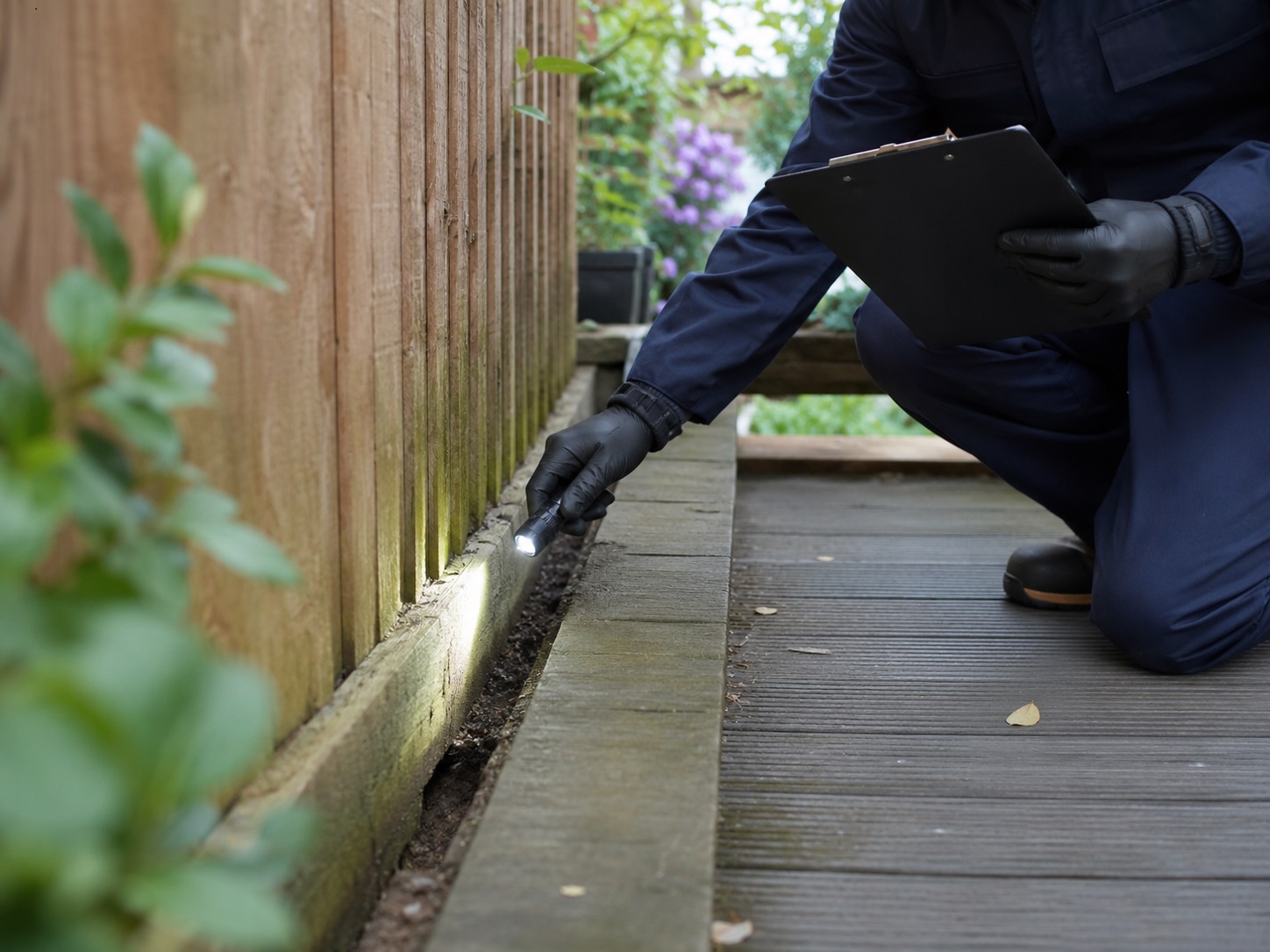
Simple non-invasive check: loosely place light sticks, leaves or loose soil near part of the entrance without blocking it. If it is moved after a few nights, the den may still be active. Do not seal the entrance during monitoring.
Fox Den or Rat Hole?
A common mistake is confusing fox activity with rats, badgers, cats, rabbits or general soil collapse. Correct identification matters.
If the opening is smaller or close to sheds, decking, drains or walls, compare it with our guide to what a rat hole looks like.
Feature
Fox den
Rat burrow
Entrance size
Usually larger and more open
Usually smaller, often 5–10 cm
Location
Under sheds, decking, shrubs, banks, outbuildings
Walls, sheds, decking, compost, drains
Smell
Strong musky fox smell
Urine-like rodent smell
Droppings
Larger fox droppings, often visible as scent marking
Smaller dark rodent droppings
Activity
Dawn, dusk, night; cubs in season
Often night; may be daylight if established
Risk
Wildlife/welfare issue, pets, mess, damage
Rodent infestation and proofing issue
Can You Block a Fox Den?
You should not block a suspected fox den until you are confident it is empty. Blocking an active den can trap animals, separate cubs from the vixen, or cause foxes to dig out elsewhere.
The safest time to exclude foxes from under sheds or decking is usually autumn or winter, after the breeding season and once cubs have left. If you have planned building work, decking repairs or shed removal near a suspected den, delay work until the cubs have left if possible.
Do not use unapproved substances or random chemicals.
Do not attempt casual trapping or relocation.
Do not feed foxes.
Do not start building work around a suspected active den without checking first.
Why Foxes Choose Your Garden
Foxes choose gardens that provide food, shelter, safety and quiet. The key is to remove the reason they keep returning.
Food waste and open bins.
Pet food left outside.
Bird food on the ground.
Fallen fruit and compost scraps.
Barbecue residue.
Overgrown shrubs and quiet corners.
Access under sheds or decking.
Gaps under fences.
Neighbours feeding foxes.
How to Humanely Encourage Foxes to Move On
The aim is to make the garden less attractive without harming the fox.
1. Remove food sources
Secure bins, remove fallen fruit, stop leaving pet food outside, clean barbecue residue, avoid feeding foxes and keep compost controlled.
2. Remove shelter
Cut back overgrown vegetation, close shed and garage doors, clear quiet hiding places and inspect areas under sheds or decking when safe.
3. Observe entry points
Watch where foxes enter and leave. Target deterrents and proofing to those points rather than treating the whole garden randomly.
4. Use approved deterrents correctly
Use only repellents approved for use with foxes and follow the manufacturer’s label. Repellents work best alongside food removal and exclusion.
5. Protect pets and livestock
Keep rabbits, guinea pigs, chickens and other vulnerable animals in strong secure enclosures.
6. Exclude access after the den is empty
Once the den is empty, block access under sheds, decking or outbuildings with suitable materials. Exclusion is usually best in autumn or winter.
Fox Den Under a Shed
Sheds are one of the most common fox den locations in London gardens. The void beneath a shed provides cover, shelter and a quiet space for resting or cubbing.
Large opening at the shed base.
Freshly disturbed soil.
Strong smell.
Droppings nearby.
Fur caught on timber.
Scratching or movement noises.
Fox seen entering or leaving.
Cubs heard or seen in spring.
Fox Den Under Decking
Decking creates a hidden, sheltered void that foxes may use for resting or denning. If the decking is close to the house, the issue may also attract other pests through food waste, shelter and structural gaps.
Foxes usually avoid people, but a den in a garden can still create practical concerns. Keep children away from the den entrance, supervise pets outside, remove pet food overnight, wear gloves when clearing droppings and avoid direct contact with foxes or cubs.
What Bon Accord Can Help With
Bon Accord can help assess the situation and advise on practical, humane steps. If the signs look more like rats than foxes, we can advise on professional rat pest control in London.
Reviewing photos or videos.
Identifying whether the hole looks like fox, rat or another animal.
Checking garden attractants.
Inspecting shelter areas such as sheds and decking.
Advising on humane deterrents.
Advising when exclusion is safe.
Identifying whether rodents or other pests are also involved.
When Should You Call for Advice?
Contact Bon Accord if you have a possible fox den under a shed or decking, are not sure whether the hole is foxes or rats, have small pets or children using the garden, or need advice on humane exclusion.
Rental property, school, nursery, restaurant or commercial premises.
Found a Possible Fox Den in Your Garden?
Do not block, flood or disturb the den before checking whether it is active. Send photos or contact Bon Accord for professional advice on identification, deterrents and safe exclusion.
A fox den usually looks like a larger hole or sheltered entrance under cover, often under a shed, decking, dense shrubs, tree roots, a bank or old structure. Signs can include fresh soil, a strong smell, droppings, fur and repeated fox activity.
An active den may have fresh soil, a worn entrance, fox smell, droppings, fur, food remains, regular sightings, cub noises or visible activity at dawn, dusk or night.
Only block a fox den when you are confident it is empty. Blocking an active den can trap animals or separate cubs from the vixen. Autumn and winter are usually the safest times for exclusion.
Avoid disturbing the den and keep children and pets away. If possible, wait until the cubs have left later in summer before carrying out exclusion or building work.
Bon Accord can advise on identification, deterrents, exclusion and wider pest risks. Any action involving foxes must be humane and lawful, with animal welfare protected.
If the hole is smaller, close to drains, walls, sheds or decking, and there are rat droppings or gnawing signs, it may be rats. Bon Accord can advise on rat identification and control.
Finding fox den can be challenging. Foxes can be a nuisance in gardens, raiding bins, digging up lawns and causing general destruction. Fortunately, there are a number of ways to identify fox den locations in the garden in order to keep them away.
The first step to keeping foxes away is to identify their den locations. Foxes usually build their dens in wooded areas, near streams or rivers, or in thickets with dense foliage. In urban areas, they may build their dens in overgrown gardens or in abandoned buildings. To locate a fox den, look for freshly dug soil, as foxes often dig to create their dens. Keep an eye out for tracks and droppings around the den site too.fox den
Deterring Foxes from Entering Your Garden
Once you have identified the fox den, the next step is to deter foxes from entering the garden. Install a tall fence around the perimeter of the garden, making sure to bury it deep into the ground to prevent foxes from digging underneath. Make sure the fence is made from a sturdy material, such as mesh or wire, and ensure it is tall enough to deter any foxes from jumping over it.
Disturbing Foxes to Disrupt their Den Locations
Foxes are shy animals and will be scared away if disturbed. If you have identified a fox den in the garden, you can try to disrupt it by making loud noises or throwing stones into the den. This will startle the foxes and they will move away from the area.
Planting Natural Repellents to Keep Foxes Away
Certain plants can be used as natural repellents to keep foxes away. Plants like lemon balm, lavender and rosemary can be planted around the perimeter of the garden to create an unpleasant smell that foxes don’t like.
Creating Physical Barriers to Prevent Foxes from Entering the Garden
Physical barriers like chicken wire can be placed around the garden’s perimeter to prevent foxes from entering. The chicken wire should be buried at least 8 inches into the ground to ensure foxes can’t dig underneath.
Adopting Humane Methods to Avoid Foxes in the Garden
In many areas, it is illegal to harm foxes or to use inhumane methods to keep them away. If you want to avoid foxes in the garden, there are humane methods you can adopt, such as using motion-activated sprinklers or lights to scare them away.
Maintaining a Clean Garden to Discourage Foxes
Foxes are attracted to gardens with easy food sources. To discourage foxes from entering the garden, make sure to keep it clean and tidy. Remove any fallen fruit, bird feeders and pet food, and make sure to put away any outdoor furniture and toys when they are not in use.
If foxes continue to be a problem, you can use traps and repellents to capture them. Live traps can be used to capture foxes, and then they can be relocated to a more suitable habitat. Repellents such as ammonia or predator urine can also be used to repel foxes from the garden.
Using Ultrasonic Devices to Drive Away Foxes
Ultrasonic devices emit a high-pitched sound that foxes find unpleasant. These devices can be used to create a sonic barrier around the garden, driving foxes away.
Consulting Professional Wildlife Management Services to Help with Fox Control
If foxes continue to be a problem, it is best to consult a professional wildlife management service. They will be able to advise you on the best methods to keep foxes away from the garden.Identifying fox den locations in the garden is the first step in keeping foxes away. There are a number of methods you can use to deter foxes, such as planting natural repellents, creating physical barriers and using ultrasonic devices. If foxes continue to be a problem, it is best to consult a professional wildlife management service who will be able to advise you on the best methods to keep foxes away from the garden.
The Growing Problem of Urban Foxes in London and What Can Be Done to Address It
The sight of foxes roaming the streets of London has become a familiar one, but what was once a novel and intriguing sight has become a growing problem. Urban foxes have become increasingly brazen in their search for food, causing disruption, destruction and danger to Londoners. In order to address this problem, we need to understand why foxes have become a problem, and what we can do to limit their impact on urban areas.
Causes of the Growing Problem of Urban Foxes in London
The first contributing factor to the increasing problem of urban foxes in London is the abundance of food sources. Due to the presence of food waste, gardens, and even pets, foxes have found a plentiful and reliable food source in urban areas. This has allowed the fox population to grow and become more brazen, as there is no incentive to leave the city in search of food.
Limiting the Presence of Foxes
The second factor is the lack of natural predators. Foxes have few natural predators in urban areas, with the most common ones being large carnivorous birds, such as hawks, and larger mammals, such as cats. As a result, foxes have been able to live and breed in urban areas with little fear of predation.Finally, the lack of public awareness of the growing problem of urban foxes has been a contributing factor. Despite the evidence of foxes becoming increasingly brazen and causing disruption, many people are still unaware of the issue. This lack of public awareness prevents the issue from being addressed, as people are unaware of the problem and its potential solutions.
Measures to Address the Problem
In order to address the growing problem of urban foxes in London, there are a number of measures that can be taken. The first is to reduce the abundance of food sources for foxes. This can be done by reducing food waste, preventing access to pet food, and discouraging people from feeding foxes.Second, it is important to limit the presence of foxes by controlling the population. This can be done by setting up humane traps and relocating foxes to a more suitable habitat.Third, public awareness of the issue needs to be improved. This can be done by educating people on the issue, and encouraging them to take measures such as avoiding feeding foxes, and reporting any sightings of foxes to the relevant authorities.
Protecting Gardens and Pets from Foxes
Finally, Londoners can take measures to protect their gardens and pets from foxes. This can be done by taking measures such as building fox-proof fencing and using deterrents such as ultrasonic devices.By implementing these measures, the problem of urban foxes in London can be addressed. This will ensure that foxes remain a welcome and harmless part of the cityscape, rather than a nuisance and a potential danger.
We thought we had bedbugs but could find no evidence apart from what we thought were bites. I called Bon Accord and Gabriel was there within a couple of hours. He told us we had carpet beetle. Finding the evidence and showing us photos of the skin reaction which was exactly what we had. He advised and returned at a time to suit us to spray which was done thoroughly and efficiently. No sign of the little critters returning. Thank you Gabriel.
Gabriel went above and beyond. He is extremely knowledgable and very efficient at what he does. The results were outstanding. Nothing is too much for him. Delighted with his professionalism and work.
Top-notched pest control service!! Went above and beyond to eradicate the rats from our property. Gabriel even offered to further investigate the infestation issues for our neighbours. We found him to be extremely professional and easy to work with. We highly recommend Gabriel to anyone in need of pest control.
Gabriel was absolutely wonderful, a real life saver when I found a mouse by my bed at 10pm. He came in less than an hour and was able to catch the mouse and put my mind at rest so I could go to sleep! Highly recommend, fab service and lovely people.
Gabriel turned up with an hours notice one evening and immediately identified the issued. He works efficiently and professionally throughout with timely follow-ups to ensure the problem was resolved. Once completed he was kind enough to continue to check in to see that the issue had gone. Having had Rentokil previously that spent two years doing very little this was a complete breathe of fresh air and solved the problem in less than two weeks. We are grateful and would highly recommend his services.
We were lucky to have found Bon Accord, they responded very fast to our request and Gabriel was very helpful and informative. He made several visits and did his absolute best until the mice problem we had was gone. Highly recommended.